






background

Le Zeus Game Demo - How to Test the Game

Get to know Le Zeus in the trial version, set the pace and session limits, and then decide whether to switch to playing for real money.

Le Zeus
Le Zeus

Why the Trial Version Is the Best Start

Imagine you have five minutes of free time and want to quickly check if a particular game "feels right" in your hand. You open the trial mode, play a few rounds, and immediately see if the pace, animations, and button layout are comfortable for you. Instead of guessing, you test it calmly – without pressure and without nerves.

The trial version offers a simple but important advantage: it allows you to learn the game before emotions associated with real stakes arise. Most often, at the beginning, people click too fast, don't notice where the settings are, ignore the win table, and then are surprised that "something is happening differently than I thought." In test mode, you can go through the interface step by step: check the menu, see where stakes are changed, how automatic spinning works, where sound is turned off, and where fast mode is enabled.

The second thing is habits. Many people start with promises: "I'll play for a short while" or "just a few rounds." And then the session stretches out because the game is engaging. When you practice beforehand in the test variant, it's easier to establish a rhythm: how many rounds you play in a series, when you take a break, what you check after each major win or after a long dry spell. This sounds mundane, but it's precisely these small details that make a difference in comfort.

It's also worth approaching this as a brief "audit of your own reactions." How do you react to quick losses? And to the sudden activation of a bonus feature? If, even during the test phase, you feel you're starting to chase results, that's a signal to set time and budget limits before you start playing with real money. The platform is for adult users, and in practice, you decide whether you play consciously or let emotions lead.

All promotional incentive structure is clearly stated in writing and/or via electronic means in an easily understood manner. All codes are accompanied by an explanation of what the code is for, who is eligible to use the code, and how it should be used. As such, players are less likely to be confused about what is required of them in order to receive a reward and how the reward will be applied after receiving it. The promotional incentives provided to participants provide them with time to become familiar with the gaming system's mechanics, their interface, and progress, before deciding how deeply they wish to become involved with this platform. Therefore, players are encouraged to participate in an informed manner, rather than being pressured or tempted to act quickly.

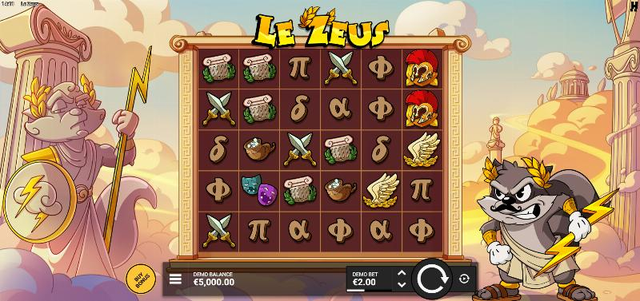
demo image 1
Le Zeus

Top casinos for playing Le Zeus — current list

ALF Casino
ALF Casino
Mafia Casino
Mafia Casino
LeoVegas
LeoVegas
Le Zeus Betway
SG Casino
Le Zeus Betano
Retro Bet
Le Zeus

What the Le Zeus Demo Offers in Practice

If you're playing on your phone on the go, you usually don't have time to read lengthy rules. Imagine this situation: you're holding a cup of coffee with one hand, scrolling the screen with the other, and you want to know immediately where to click so you don't mix up options. In such a moment, the game test becomes the quickest instruction – you see everything live, without theory.

In practice, the demo variant serves three specific tasks. First: recognizing symbols and line layouts or how wins are calculated. You don't need to memorize names; it's enough to notice which symbols "do the work" and which are just background. Second: checking how often small payouts appear and what longer streaks without a win look like. This isn't a promise of specifics – it's an observation of dynamics that helps adapt your playing style to your own patience. Third: verifying additional features, because that's where many players lose their bearings.

It's good to approach the test like a checklist, not like a warm-up without a purpose. Establish: "I'm checking the stake settings," then "I'm checking the speed of rounds," then "I'm looking where the sound and vibration controls are." It sounds simple, but when you enter the game with real money without this map, it's easy to click something in a hurry and only realize it after the fact.

There's also the element of accessibility. Le Zeus is available in Poland, so it's worth checking immediately whether the interface and responsible gaming features are clear to you: session limits, time reminders, breaks, self-exclusion. In 2026, more and more people treat these tools as standard, not as an "option for someone else." It's simply a safety mechanism that works when set up in advance.

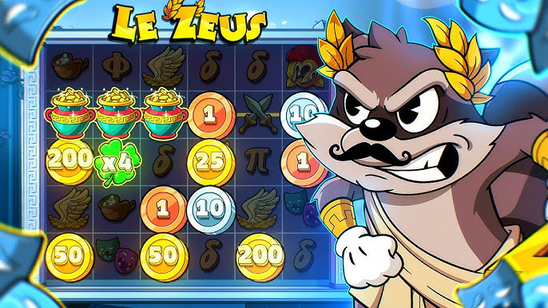
demo image 2
Le Zeus

How to Prepare for Playing for Real Stakes

Imagine you're having a good day, yet after a dozen rounds, you start acting automatically. You click because "just one more," and then you realize you've stopped paying attention to what's happening. Preparation isn't magic – it's settings and habits that stop you before you get carried away by momentum.

First, separate two things: learning the mechanics and playing for a result. Learning the mechanics should be short and specific: get to know the layout, check the functions, see how the game reacts to stake changes. Only then, if you want to at all, do you move on to a session with a budget. It's also worth setting your own limits: how many minutes one session lasts, how many maximum rounds you play without a break, at what point you stop regardless of the outcome.

The second thing is the environment. If you're playing on your phone, turn on time notifications or set a timer outside the game. If you're playing on a computer, close distractions. These are small things, but they determine whether you're playing consciously or just "scrolling" through rounds.

How to Use the Le Zeus Slot Demo for Learning

Imagine you want to test a bonus feature, but you don't want to wait for it indefinitely. You do a series of short test sessions: a few dozen rounds each time, with a different pace and different settings. This way, you learn not only the mechanics but also your own reaction: whether a slow pace annoys you, or on the contrary, fast rounds turn you into a "clicker."

In training, the most important thing is not to mix goals. You're not trying to "win," but just to observe: what triggers additional events, what the messages on the screen look like, where win information appears, what specific animations mean. If a feature has additional rules, this is where you have the space to catch them without rushing. It's also worth consciously using the paytable preview option – not to look for ideal symbols, but to understand what's possible and how the game shows it.

Good habit: after every longer streak without a result, take a break and ask yourself one question – are you still playing according to the plan, or are you trying to "make up for it"? This short stop acts like a brake, especially when real money comes into play later.

Stake Settings, Autospin and Limits

It usually looks like this: someone starts calmly, and then the automatic spin does its job – the finger rests, the head rests, and the session flies by. Imagine you wanted to play for five minutes, and half an hour passes because there was no natural moment for a break. Limits and settings are there to create that moment.

Start with the stakes. It's not about "little" or "a lot," but about consistency with your session budget. Decide in advance how many rounds you plan to play and adjust the stake so you don't exceed your plan in the first few minutes. Then, check how autospin works: can you set the number of rounds, can a stop condition be added, is there a time reminder? If such options are available, use them like seatbelts.

One more thing: game pace. Fast rounds can be engaging because the result appears instantly. A slow pace is often better for control, as it gives you a moment to decide. In 2026, more and more people are choosing a mixed solution: fast pace in short blocks, then a break and a summary. Sounds boring? Maybe. But it works if you want to maintain control.

Short Test Session Plan

The simplest plan has three stages. First, 20-30 rounds to get familiar with the layout and symbols. Then a break, even just a minute, to check settings and return with a clear goal. Finally, another short block, but with a different pace or stake, to see the difference in feeling. This scheme teaches you conscious switching instead of mindless clicking.

Signs It's Worth Taking a Break

There are simple warning signs: you start speeding up for no reason, you stop noticing messages, you get irritated by small things, or you catch yourself thinking "just one more round and I'll stop." At that point, a break is not a punishment, but a tool. Turn off the game, put down your phone, and only return when the decision for the next session is calm, not impulsive.

Le Zeus

Registration, Deposit, and Verification at Le Zeus

Imagine you want to play in the evening, and just then you encounter a request to confirm your data. Suddenly, instead of entertainment, you have frustration because "it was supposed to be quick." That's why it's better to sort out your account beforehand, calmly, rather than when you're already set to play.

The process usually boils down to three steps: profile creation, setting up payment methods, and identity verification. Details may vary, but the logic is similar: the platform needs to know you are an adult and that the data is consistent, and you need assurance that withdrawals and limits will work predictably. It's important to enter data consistently: the same first and last name, the same address, the same phone number. Typos can later prolong the process, even if everything else is in order.

It's also worth setting up security measures right away: a strong password, additional login verification if available, and activity notifications. This is not overkill – it's hygiene, especially when you use your phone and happen to log in from different places.

Account Creation Step by Step

If you do it in a hurry, it's easy to miss something important. Imagine you create an account in the evening, and in the morning you just want to play quickly – and suddenly it turns out you haven't confirmed your email address or set basic limits. It's better to go through the process like a checklist: you fill in the data, confirm contact, set currency and preferences, and at the end, you check if everything is saved.

Good practice: after registration, go straight to the profile settings. See where the responsible gaming tools are, where deposit and time limits are changed, how the transaction history works. When you know these places, you won't be looking for them under pressure later. And one more small detail that saves your nerves: store your settings in your head like a map - "limits are here, help is here, history is here". It sounds trivial, but in practice, it speeds everything up.

Payment Methods and Security

Usually, people only think about payment when they want to deposit or withdraw. Imagine you're in the middle of the day and want to add funds, but the method you like requires additional confirmation. If you check the rules beforehand, you avoid surprises and plan your session without stress.

Three things matter in payments: data consistency, security, and process predictability. In practice, this means that the method should be assigned to you, not to "someone from the family," and the data in the profile should match. It's also worth looking at the restrictions: minimum and maximum amounts, possible daily limits, and requirements for additional authorization. It's not about finding the easiest way, but about avoiding a blockage at a crucial moment.

Below is a short table that helps compare the approach to the most common method categories - without promising specific times, as these depend on the chosen solution and verification.

Method Category

What to Check Before Use

How the Process Usually Looks

Tip for Peace of Mind

Payment Card

Owner data consistency

May require additional authorization

Make sure bank limits do not block transactions

Bank Transfer

Recipient data and payment title

Time can depend on the bank

Make a small test deposit before you plan a longer session

Electronic Wallet

Is the account verified

Confirmations can be phased

Keep one account as primary, don't mix several at once

Other Solutions

Terms and possible fees

Depends on provider and country

Read messages during, don't click "next" blindly

Security is also about your habits: don't log in on other people's devices, don't save your password in the browser if the computer is shared, and make sure transaction notifications are enabled. By 2026, this will already be standard – simple settings can save you very real problems.

Withdrawals, Documents And Common Mistakes

Imagine you win and want to withdraw funds, but it turns out that one document is missing or the data does not match the payment method. This is the moment when emotions are highest, so frustration also hits harder. That's why it's worth dealing with withdrawals "coldly" – before you even plan a bigger session.

The most common mistakes are repetitive. First: data discrepancies – a typo in the name, a different address, an outdated phone number. Second: attempting to withdraw to a method not linked to the player. Third: lack of patience with verification stages, causing someone to repeatedly submit the same instructions. Good practice is simple: one instruction, clear data, complete documents, and in case of doubt, contact support.

It's also worth remembering your own comfort limit. If you see that the topic of withdrawals or verification stresses you out, take a break. It's not a race. It's better to have a well-organized process than to act impulsively, because then it's easier to make a mistake.
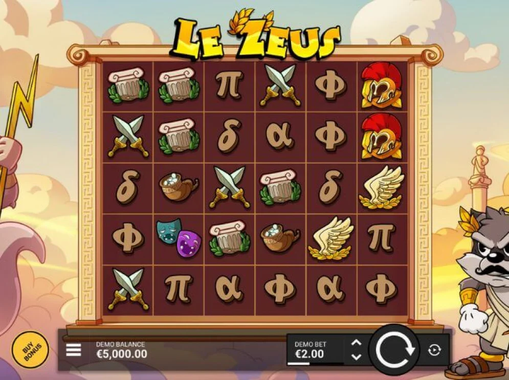
demo image 3

Le Zeus Casino Bonus Codes Activation Process

Le Zeus Casino Bonus Codes Conditions

Session Strategy: From Test to Real Play

It usually starts innocently: "I'll just see how it works." Imagine that after a few rounds, you feel your adrenaline rising because you've hit a good streak. Then, the session strategy is like a roadmap – not to take away the fun, but to avoid going off track at the first turn.

Transitioning from demo mode to playing for real money only makes sense if you have three things: a budget, time, and a clear goal. Budget means you know how much you can spend on entertainment and that this amount is comfortable for you. Time means you're not playing "on the fly," because haste encourages thoughtless clicking. Goal means you know why you're playing: for relaxation, for testing, for a short diversion – and not to chase a result.

Session Budget And Bankroll Management

Imagine you set a budget for the evening and you want the entertainment to last, not end after a few minutes. Then the most important thing is to match your stake to the number of rounds you plan. Instead of thinking "I'll play little," calculate: how many rounds can you realistically do in 15-20 minutes and how should the budget sustain that.

Budget management is also about deciding on breaks. If you play without interruption, it's easier to act on impulses: raising the stake, chasing a result, "I'll get it back." With breaks, it's different – you have a moment to reset and regain control. Good practice: set a time limit for yourself and stick to it regardless of the outcome. If you want to return, come back later, not "immediately."

How To Read Round And Feature Rules

People usually skip the rules because they sound like a washing machine manual. Imagine, however, that you trigger a feature and then don't understand why the result looks the way it does. One quick read of the rules saves a lot of guesswork.

Focus on specific things: what triggers additional features, if there are special symbols and how they work, whether winnings are counted differently at specific times. Pay attention to the messages on the screen – often they tell you exactly what happened. If something is unclear, pause, go back to the description, and only then continue. Not because you have to, but because you're playing consciously.

When To Change Your Stake, And When To Stick To The Plan

Imagine you're on a good streak and you're tempted to "raise" the stakes because you feel it's your moment. This is the classic point where the session plan should speak louder than emotions. If raising the stakes wasn't in the plan, it most often means an impulsive decision.

A sensible change in stakes is one that comes from budget and time, not mood. Example: you have 100 rounds planned and you see that the game pace is slower than you expected, so you adjust the stakes to keep the session comfortable. On the other hand, "I'm changing it because it's sure to work now" is a direct path to frustration. Stick to the plan, and if you want to experiment, do it in a separate, short, and pre-limited session block.

Support, Responsible Gaming Settings

Usually, you only think about support when something isn't working. Imagine you suddenly can't log in or a transaction is pending, and you start clicking everything at once. At that point, technical support and transaction history are your fallback – it's better to know beforehand where to find them.

Responsible gaming settings are a separate topic, but in practice, it's simple: time limits, deposit limits, breaks, self-exclusion. These tools are for adults who want to maintain control over their entertainment. If you tend to have long sessions, set time reminders. If you find yourself making impulsive decisions, set deposit limits. Not to restrict yourself "by force," but to have a barrier when emotions run high.

Most Frequent Questions Before Starting

Imagine everything is ready, and you still have one thought in your head: "Am I really doing this right?" That's normal. Many people before their first session want clarity on settings, security, and how to react when something goes wrong.

The best approach is specific: choose one thing to check, do it, then move to the next. Don't try to tackle everything at once. If you play in the evening, prepare your account beforehand. If you play on your phone, check how the interface looks in portrait and landscape mode. If control is important to you, set limits before you start. Then the start is calmer, and the session is more predictable.

What to Do When Something Isn't Working Properly

Imagine the game is loading, but the buttons are slow to respond, or you see a message you don't understand. The first instinct is to keep clicking, but it's better to do the opposite: stop, check your connection, refresh, and only return when everything is running smoothly.

If the problem concerns your account or payment, do not make several attempts at once. One attempt, one decision, then check the transaction history. If it's still unclear, contacting support usually speeds things up – especially if you describe the problem specifically: what you clicked, what appeared, at what time. Such a description is better than "it doesn't work," as it offers a chance for a quick solution.

FAQ

How does the trial version work in Le Zeus?

The trial version allows you to test the game mechanics without financial risk: you check the button layout, round pace, stake settings, and how winnings are presented. Imagine you just want to see if the game is comfortable for you on your phone – in test mode, you can do this in a few minutes, without pressure and without having to make hasty decisions. The best approach is like a quick checklist: first settings, then a few series of rounds, and finally a quick summary to see if everything is clear.

Can I play on my phone without losing track of time?

Yes, but it's worth setting simple limits beforehand. Imagine the situation: you start "for a moment," and then you realize half an hour has passed because each round takes a moment, and it's easy to fall into an automatic rhythm. An external game timer, breaks after a certain number of rounds, and time reminders, if available in account settings, help. The key is one: the break should appear before you feel you need it.

What is most important when setting initial stakes?

The most important thing is to match the stake to the session budget and the planned number of rounds. Imagine you want to play for 15 minutes, but the stake is so high that the session ends after a few unsuccessful rounds – this spoils comfort and provokes impulses. It's better to set an entertainment budget, plan the number of rounds, and only then choose the stake so that the game is calm and predictable. If you are tempted to change the stake during the game, do so only within a planned block, not "because it has to hit now."

Why are data and document verification sometimes requested?

Verification serves to confirm that the account belongs to the correct person and is used by an adult user, and that the data is consistent with the payment method. Imagine you want to withdraw funds and suddenly it turns out there's a typo in your name in the profile – then the process might be prolonged due to a minor detail. That's why it's best to fill in the data correctly right away and prepare the documents in advance, instead of doing it emotionally after a successful session. The fewer inconsistencies, the less stress.

How to avoid the most common mistakes when withdrawing funds?

Most often, it's about three things: data consistency, the correct payment method, and patience with the process. Imagine sending several instructions one after another because "the first one doesn't work" – in practice, you can only create chaos in the operation history. It's better to submit a single instruction, check the status in the transaction history, and wait for an update. If something is unclear, describe the situation to support specifically. A little discipline usually shortens the entire process.

What settings help you play responsibly?

Time limits, deposit limits, break reminders, and the ability to temporarily block access to the game help. Imagine you feel growing irritation and start playing faster – then the previously set limit acts like a brake that stops you at the best moment. In 2026, such tools are standard, and it's worth treating them as a normal account feature, not as something "for someone else." Set them when you are calm, because that's when decisions are most reasonable.

What to do when the game runs slowly or errors appear?

First, stop the session and check the basics: internet connection, device load, browser or app updates. Imagine you see delays and try to "click through" them – it's easy to make mistakes and cause unnecessary stress. It's better to refresh, return only when performance is stable, and if the problem concerns the account or transactions, check the operation history and contact support with a clear description: what happened, when, and what message you saw. This sequence is calmer and usually leads to a solution faster.

Play Now
🇬🇧 English